IPTV vs. Streaming Services in 2026: Cost, Channels, Sports & Which Is Right for You?
A decade ago, the promise of internet streaming was straightforward: liberate viewers from the tyrannical pricing, cumbersome set-top box rental fees, and bloated multi-year contracts of traditional cable and satellite television. Early cord-cutters celebrated canceling their $150 monthly cable bills in favor of a clean, inexpensive $8.99 Netflix subscription.
Fast forward to 2026, and the digital entertainment landscape has metastasized into something uncomfortably familiar.
What was once a simple, consolidated streaming market has splintered into an aggressive corporate land grab. Every major media conglomerate has launched its own proprietary streaming platform, pulling their content behind separate paywalls. Today, following a handful of television shows and a typical sports schedule requires subscribing to Netflix, Disney+, Amazon Prime Video, Max, Apple TV+, Paramount+, and Peacock—plus dedicated live sports add-ons.
Consumers are now experiencing severe "streaming fatigue." Household monthly entertainment spending frequently exceeds $160 to $200 per month, recreating the exact bloated cost structures of the cable era. Even worse, viewers must constantly juggle half a dozen different apps, remember multiple passwords, deal with fragmented watchlists, and endure confusing regional sports blackouts.
In response to this subscription fragmentation, Internet Protocol Television (IPTV) has emerged as the premier all-in-one alternative for modern cord-cutters.
However, understanding the difference between IPTV and mainstream streaming services requires more than comparing monthly subscription costs. The two approaches operate on fundamentally different technological architectures, cater to distinct viewing habits, and offer contrasting strengths.
This comprehensive guide is the definitive head-to-head comparison between IPTV and mainstream streaming platforms for 2026. Below, we break down content variety, live sports access, pricing structures, user interface convenience, hardware flexibility, and legal frameworks to help you determine which streaming model fits your household's lifestyle and budget.
Architectural Breakdown: How IPTV and Streaming Platforms Differ
Although both IPTV and mainstream streaming platforms transmit video data across internet protocol networks, their engineering architecture, data delivery methods, and user interfaces are built with fundamentally different intentions.
┌───────────────────────────────────────┬───────────────────────────────────────┐
│     IPTV (Internet Protocol TV)       │   MAIN STREAMING APPS (SVOD / vMVPD)  │
├───────────────────────────────────────┼───────────────────────────────────────┤
│ • Focus: Live linear broadcast TV     │ • Focus: On-demand catalogs & originals│
│ • Navigation: 24/7 EPG grid guide     │ • Navigation: Algorithmic title tiles │
│ • Channels: 50,000+ global channels   │ • Channels: 0 (SVOD) to 80–100 (vMVPD)│
│ • Sports: Global feeds & PPVs included│ • Sports: Heavily fragmented rights   │
│ • Player: Open standard (TiviMate)    │ • Player: Proprietary walled gardens  │
│ • Cost: ~$10–$15 / month unified      │ • Cost: $15–$25 each ($120–$180 total)│
└───────────────────────────────────────┴───────────────────────────────────────┘
1. What Is IPTV (Internet Protocol Television)?
IPTV is a broadcast distribution architecture that delivers continuous linear television feeds over IP networks.
- Linear Broadcast Focus: IPTV is structured around continuous 24/7 broadcast networks (sports channels, local news, movie networks, international feeds).
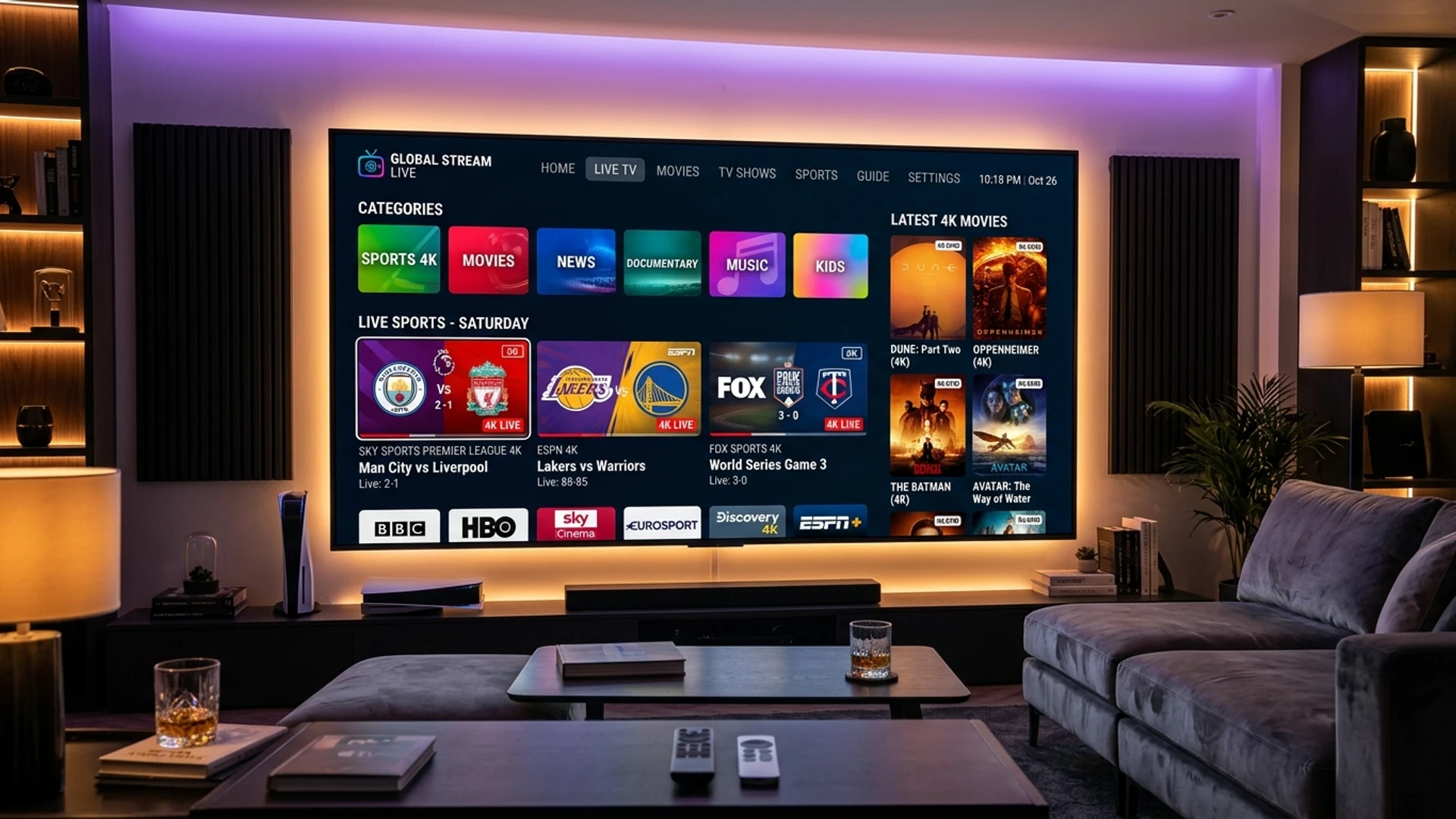
- Unified Electronic Program Guide (EPG): Channel navigation mirrors traditional television: you open an interactive grid guide, browse current programming schedules, see upcoming shows, and switch channels instantly.
- Open Player Standard: IPTV services utilize standardized streaming credentials—such as Xtream Codes API or M3U Plus playlists—allowing you to connect using high-performance, customizable media players like TiviMate, IPTV Smarters Pro, or IBO Player.
- Integrated VOD: While live television is the primary pillar, high-caliber providers like Wizard TV bundle massive on-demand libraries of 120,000+ movies and series directly within the same unified interface.
2. What Are Mainstream Streaming Services?
Mainstream streaming platforms generally divide into two distinct operational models:
A. Subscription Video on Demand (SVOD)
Platforms like Netflix, Disney+, Amazon Prime Video, Max, and Apple TV+ focus almost exclusively on pre-recorded, on-demand catalogs.
- Viewing Habit: "Watch whatever you want, whenever you want." There are no live broadcast schedules or electronic program guides.
- Exclusive Originals: These platforms invest billions in proprietary high-budget original movies and episodic drama series (e.g., Stranger Things, The Mandalorian, House of the Dragon) that are strictly locked behind their individual walled gardens.
B. Virtual Multichannel Video Programming Distributors (vMVPD)
Platforms like YouTube TV, Hulu + Live TV, Fubo, and Sling TV attempt to recreate traditional cable packages over the web.
- Viewing Habit: Live linear cable channels combined with cloud DVR functionality.
- The Catch: Pricing for vMVPDs has skyrocketed. YouTube TV and Hulu + Live TV now charge between $75 to $90+ per month for a modest lineup of 80 to 100 channels—approaching the exact pricing of legacy Comcast or DirecTV packages.
Content Variety: Live Television vs. Fragmented App Silos
The single greatest operational difference between IPTV and mainstream streaming services lies in content consolidation.
The Fragmented Streaming Landscape in 2026:
[Premier League Match] ──> Open Peacock App ($7.99/mo)
[Champions League]     ──> Open Paramount+ App ($7.99/mo)
[Thursday Night NFL]   ──> Open Amazon Prime App ($14.99/mo)
[Friday Night Baseball]──> Open Apple TV+ App ($9.99/mo)
[Local News & Cable]   ──> Open YouTube TV App ($79.99/mo)
Total App Juggling: 5 separate apps, 5 separate logins, $120+ / month!

The Unified IPTV Experience (Wizard TV):
[Single IPTV Player]   ──> [All Sports + All Networks + VOD in One Unified Guide] ($12/mo)
1. Channel Breadth and Geographic Diversity
- Mainstream Streaming Services: Extremely regionalized. If you subscribe to a US streaming package, you receive only US channels. Watching a cricket match from India, a domestic football match from the UK, or regional news from Canada or Latin America requires searching for separate international niche add-ons.
- IPTV (Wizard TV): Provides an expansive, borderless catalog spanning 50,000+ live television channels from over 150 countries. Whether you want to watch domestic networks (ABC, CBS, NBC, FOX, BBC, ITV), premium cinema channels (HBO, Cinemax, Sky Cinema), or international programming across Europe, the Middle East, Asia, and Latin America, everything lives inside a single channel list.
2. The Live Sports Dilemma: Fragmentation vs. Unification
For sports enthusiasts, the mainstream streaming ecosystem has become an absolute nightmare of fragmented broadcasting rights:
- In the United States, NFL games are scattered across CBS, FOX, NBC, ESPN, Amazon Prime Video (Thursday nights), and YouTube TV (Sunday Ticket).
- In the United Kingdom, Premier League matches are split across Sky Sports, TNT Sports, and Amazon Prime, with Saturday 3:00 PM fixtures completely blacked out from domestic screens.
- Combat sports pay-per-views (UFC, boxing) demand extra $80+ one-off fees on top of base app subscriptions.
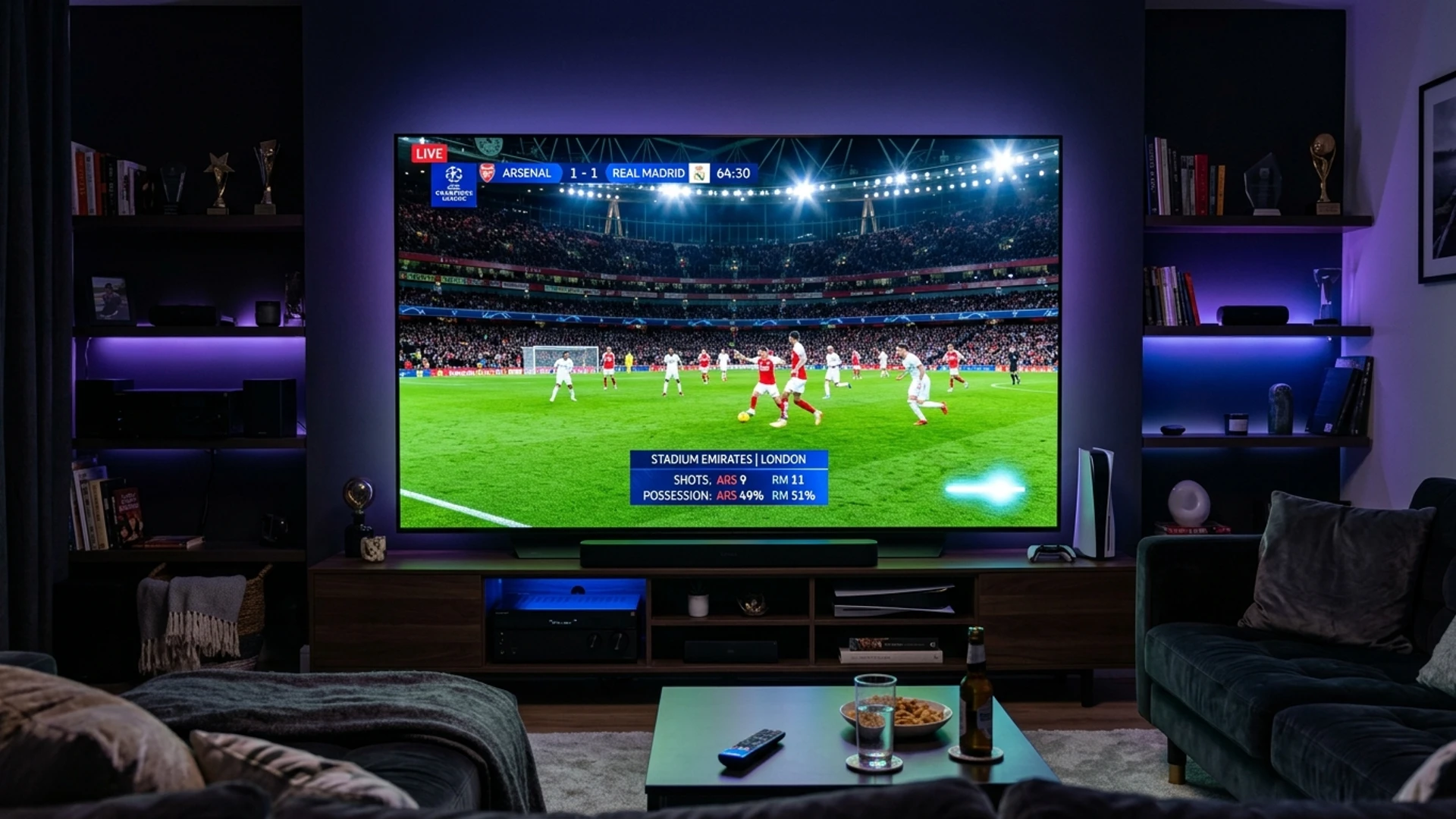
The IPTV Advantage: A sports-grade IPTV subscription consolidates every major sports network on Earth into a unified sports hub. You can tune into Sky Sports Premier League, TNT Sports, NBC Sports, Optus Sport, beIN Sports, DAZN, NFL RedZone, NBA League Pass, and dedicated Pay-Per-View channels within the exact same guide. Fast-moving 60 FPS feeds and multi-screen Multi-View allow you to follow four matches simultaneously on a single TV screen.
Tired of Paying for 5 Different Streaming Apps?
Consolidate your live sports, premium cable networks, and 120,000+ movies into a single unified subscription with Wizard TV. Save over $1,200 annually.
Compare Wizard TV PlansCost Comparison: The Financial Reality of Cord-Cutting in 2026
When cord-cutting began, saving money was its primary justification. In 2026, the economics of subscribing to individual streaming services tell a sobering financial story.
The table below contrasts the real annual cost of a typical "stacked" streaming household versus an all-in-one Wizard TV IPTV subscription:
| Streaming Service / Tier | Content Provided | Typical Monthly Cost (2026) | Annual Cost |
|---|---|---|---|
| Netflix (Standard No Ads) | Movies, Series, Originals | $15.49 / mo | $185.88 |
| Disney+ & Hulu Bundle | Disney, Marvel, Star Wars, FX | $19.99 / mo | $239.88 |
| Max (Formerly HBO Max) | HBO Drama, Warner Bros. Cinema | $16.99 / mo | $203.88 |
| Amazon Prime Video | Movies, Thursday Night Football | $14.99 / mo | $179.88 |
| Apple TV+ | Prestige Originals, MLS Soccer | $9.99 / mo | $119.88 |
| Paramount+ with Showtime | Champions League, Showtime Films | $12.99 / mo | $155.88 |
| Peacock Premium Plus | Premier League, NBC Shows | $11.99 / mo | $143.88 |
| YouTube TV (Base Plan) | 85 Live Cable & Broadcast Channels | $79.99 / mo | $959.88 |
| TOTAL STACKED COST: | Fragmented across 8 Apps | $182.42 / month | $2,189.04 / year |
| WIZARD TV SUBSCRIPTION: | 50,000+ Channels + 120,000 VOD | ~$10.00 to $15.00 / mo | ~$120.00 / year |
| ANNUAL NET SAVINGS: | All Content in One Interface | SAVE $170+ / month | SAVE OVER $2,000 / YEAR |
The financial reality is undeniable: subscribing to individual streaming apps to satisfy an entire household's viewing preferences costs over $2,000 per year.
By contrast, an enterprise-grade IPTV subscription provides comprehensive live television, every major sports league, and an expansive on-demand movie library for approximately $120 to $150 annually—yielding net savings exceeding $1,800 to $2,000 every single year.
User Experience and Interface: The Battle of Navigational Convenience
How you interact with your television screen on a Tuesday evening after a long workday dramatically impacts your satisfaction.
Mainstream Streaming UX (The Fragmented Search):
1. Pick up remote.
2. Open Netflix ──> Scroll for 15 minutes ──> Can't find movie.
3. Exit Netflix ──> Open Max ──> Scroll for 10 minutes ──> Nothing appeals.
4. Exit Max ──> Open Peacock ──> Find out match ended 20 minutes ago.
Result: 30 minutes wasted browsing algorithmic tiles!

IPTV Unified UX (Wizard TV + TiviMate):
1. Pick up remote ──> TV powers on directly into last viewed channel.
2. Press "Guide" button ──> Instant interactive 24/7 EPG grid.
3. Channel surf live sports, news, and movies with 1.5-second zapping.
Result: Immediate entertainment within 5 seconds!
1. Algorithmic Tile Fatigue vs. Channel Surfing
- Mainstream Streaming Apps: Designed around predictive algorithms that push content the platform wants to promote. Browsing involves scrolling through endless horizontal carousels of poster tiles. Studies show that average viewers spend between 15 to 20 minutes every evening simply deciding what to watch—a frustrating psychological phenomenon known as "choice paralysis."
- IPTV: Reclaims the beloved, effortless ritual of channel surfing. You power on your television, and video immediately fills the screen. Pressing the directional pad pulls up a classic, full-screen EPG grid displaying live programming across hundreds of categorized channels. You can zap through sports, glance at evening news broadcasts, and settle into a broadcast within seconds.
2. Hardware Agnosticism vs. Walled Gardens
- Mainstream Streaming Apps: Bound to proprietary, uncustomizable app designs. You cannot change Netflix's layout, adjust Amazon Prime's font sizes, or reorder menu tabs. Furthermore, apps frequently discontinue support for older televisions, forcing unnecessary hardware upgrades.
- IPTV: Celebrates open customization. By utilizing industry-standard players like TiviMate, IPTV Smarters Pro, or IPTVX, you control every visual element: customize channel row heights, change color themes, build custom favorite groups, assign custom station logos, and configure multi-screen multi-view layouts tailored to your exact preferences.
Where Mainstream Streaming Platforms Still Excel
An objective comparison must acknowledge where mainstream subscription platforms maintain clear advantages over IPTV:
1. Prestige First-Party Original Productions
Platforms like Netflix, HBO/Max, and Apple TV+ invest hundreds of millions of dollars into exclusive original series and big-budget films. Titles like Succession, Stranger Things, Severance, or The Crown originate exclusively within those studios' production ecosystems. While high-end IPTV providers like Wizard TV rapidly archive these episodes into their VOD libraries within 24 hours of release, viewers who demand day-and-date 4K Dolby Vision releases the exact second an episode drops may appreciate first-party app access.
2. Seamless Offline Mobile Downloads
For frequent travelers, airline commuters, or individuals without cellular data access, mainstream mobile apps allow users to download movies and series episodes directly to tablet or smartphone storage for offline playback without an active internet connection. IPTV live channels, by their very nature, require an active internet connection.
3. Native Smart TV App Pre-Installation
Every television sold today comes pre-installed with Netflix, Prime Video, and YouTube on the remote control. Setting up IPTV, while straightforward, requires downloading a third-party player application (such as TiviMate or IBO Player) and inputting playlist credentials—a process that takes 5 to 10 minutes. For step-by-step guidance on setting up any television or streaming stick, consult our Wizard TV Installation Tutorials.
The Collapse of the vMVPD Promise: Why YouTube TV and Hulu Are Cable 2.0
To understand the modern cord-cutting migration toward IPTV, one must examine the rise and fall of the vMVPD (Virtual Multichannel Video Programming Distributor) promise.
When services like YouTube TV, Hulu + Live TV, PlayStation Vue, and Sling TV launched between 2015 and 2017, they marketed themselves as the consumer-friendly saviors of live television. They promised slim bundles of 40 to 60 essential channels, cloud DVR storage, and no equipment rental fees for an attractive introductory price of $35 to $40 per month.
The vMVPD Price Inflation Timeline:
2017: YouTube TV Launches at $35 / month ────────> "Cut the Cord & Save!"
2019: Price Increases to $49.99 / month ─────────> Adding corporate channel packages
2020: Price Increases to $64.99 / month ─────────> Forced ViacomCBS bundles
2023: Price Increases to $72.99 / month ─────────> Base plan price hike
2026: Price Reaches $79.99–$89.99+ / month ──────> Plus 4K Add-on ($9.99) & RSN Fees!
Total Outcome: Exactly identical to traditional legacy cable bills!
What Went Wrong with Mainstream Live TV Streaming?
The vMVPDs fell victim to the exact same corporate carriage disputes and forced channel bundling that destroyed traditional cable:
- Forced Channel Bundling: Broadcast conglomerates (Disney, Paramount, Warner Bros. Discovery) forced vMVPDs to carry dozens of unwanted auxiliary cable networks as a condition of licensing primary sports and broadcast channels.
- The Disappearance of Regional Sports Networks (RSNs): Due to astronomical carriage fees demanded by regional sports syndicates (Bally Sports, YES Network, NESN), YouTube TV, Hulu, and Sling TV dropped local sports networks from their base tiers entirely. Fans in New York, Boston, Los Angeles, and Chicago found themselves paying $80/month for a service that could not broadcast their local baseball, basketball, or hockey teams.
- The "4K Add-On" Nickel-and-Diming: Platforms like YouTube TV charge an extra $9.99 per month simply to unlock 4K resolution on the handful of sporting events broadcast in 4K—a feature that IPTV providers include natively in standard subscription tiers.
Today, subscribing to YouTube TV with 4K Plus and a sports tier costs over $100 per month—completely obliterating the financial rationale for cutting the cord in the first place.
Technical Deep-Dive: Video Bitrates and Encoding Standards
Beyond channel counts and monthly subscription prices, how do IPTV and mainstream streaming services compare in raw audio/video quality?
Average Bitrate Comparison for 1080p 60FPS Live Broadcast:
Mainstream vMVPD (Hulu/Sling) ──> 5.5 to 7.0 Mbps (Aggressive compression, softer detail)
Premium IPTV (Wizard TV)       ──> 8.0 to 14.0 Mbps (High-bitrate transport, sharper turf)
4K Ultra HD Broadcast (UHD)    ──> 18.0 to 28.0 Mbps (Dedicated high-bitrate HDR stream)
1. Dynamic Transcoding vs. Native High-Bitrate Feeds
- Mainstream Streaming Services: Operate at colossal global scale with millions of simultaneous users. To minimize their massive cloud bandwidth transit bills, services like Hulu or YouTube TV aggressively compress live linear feeds down to 5.0–7.0 Mbps. While this ensures streams load on low-speed internet, it results in noticeable compression artifacting, macro-blocking in high-motion sports, and softened textures.
- Enterprise IPTV (Wizard TV): Delivers unthrottled high-bitrate broadcast transport feeds. Major sports networks transmit at 8.0 to 14.0 Mbps in Full HD 60 FPS, preserving grass blade detail on football pitches, crisp puck visibility in hockey, and razor-sharp on-screen graphics.
2. Audio Standards: Stereo AAC vs. 5.1 Dolby Surround
- In mainstream live TV streaming apps, 5.1 surround sound is often inconsistent, frequently falling back to basic 2.0 stereo audio on regional channels or certain streaming devices.
- High-grade IPTV playlists transmit native Dolby Digital (AC3 / E-AC3) 5.1 surround sound directly from broadcast transponders, delivering genuine directional audio for home theater soundbars and AV receivers.
5 Practical Scenarios: Which Option Fits Your Household?
To make the right choice between linear IPTV and subscription streaming apps in 2026, evaluate which of these five viewer personas represents your household:
[Viewer Persona Decision Framework]
├── Persona 1: The Diehard Live Sports Fan ─────> 100% IPTV (Unrivaled sports & PPV)
├── Persona 2: The International / Expat Family ─> 100% IPTV (Global channels from 150+ countries)
├── Persona 3: The Prestige Drama Binge-Watcher ─> SVOD Apps (Netflix / Max originals)
├── Persona 4: The Busy Household with Kids ────> Hybrid Model (IPTV + Disney+)
└── Persona 5: The Traditional Cable Surfer ─────> 100% IPTV (Classic EPG grid & instant zapping)
Persona 1: The Diehard Live Sports Fan
- Your Habit: You watch Premier League, Champions League, NFL Sunday Ticket, NBA, Formula 1, and UFC pay-per-view events.
- The Verdict: IPTV is the undisputed winner. Subscribing to all the fragmented apps and PPVs required to watch these sports legitimately costs upwards of $250+ per month. An IPTV service like Wizard TV consolidates every single match, every regional sports network, every international 3:00 PM Saturday blackout feed, and all major PPV events into a single, high-framerate 60 FPS sports hub with multi-screen Multi-View support.
Persona 2: The International or Expat Household
- Your Habit: You live in the US, UK, Canada, or Australia, but your family wants to watch native live television, news, and entertainment from your home country (e.g., France, Germany, Italy, Spain, India, Arabic nations, Latin America).
- The Verdict: IPTV is the only comprehensive solution. Mainstream streaming platforms are strictly geo-restricted to domestic content. Wizard TV provides 50,000+ live broadcast channels spanning 150+ countries, allowing expat families to stay connected to home news, cultural programming, and domestic leagues without complex satellite dish installations.
Persona 3: The Prestige Drama Binge-Watcher
- Your Habit: You rarely watch live sports or broadcast television. Your viewing consists primarily of binge-watching high-budget episodic drama series like Stranger Things, House of the Dragon, or The White Lotus.
- The Verdict: Dedicated SVOD streaming apps are ideal. While Wizard TV's 120,000+ VOD library archives trending series within 24 hours of release, viewers who prioritize immediate day-one 4K Dolby Vision mobile offline downloading will appreciate first-party app subscriptions.
Persona 4: The Busy Household with Children
- Your Habit: Parents watch live news, sports, and prime-time broadcast television; children watch animated movies and educational programming.
- The Verdict: The Smart Hybrid Model. Use Wizard TV as your home's central television backbone for sports, local news, and cable entertainment ($12/month). Supplement with a single Disney+ subscription ($14/month) for children's programming. Total household entertainment expenditure: ~$26/month—saving over $1,500 annually compared to cable.
Persona 5: The Traditional Cable Surfer
- Your Habit: You miss the effortless convenience of turning on the TV, picking up a traditional remote, scrolling through a 24/7 program guide, and seeing what is on right now.
- The Verdict: IPTV is a revelation. Paired with an app like TiviMate or a dedicated Formuler Z11 set-top box, IPTV replicates the exact intuitive, rapid channel-surfing ritual of classic cable, but with internet flexibility and pristine 4K video.
Head-to-Head Comparison: IPTV vs. Streaming Platforms Matrix
The table below provides a comprehensive feature-by-feature evaluation across all major streaming categories in 2026:
| Feature / Capability | Linear IPTV (e.g., Wizard TV) | On-Demand SVOD (Netflix, Disney+) | Live TV vMVPD (YouTube TV, Hulu) |
|---|---|---|---|
| Live Channel Selection | 50,000+ Global Channels | 0 Live Linear Channels | 80–100 Domestic Cable Channels |
| Live Sports Coverage | Complete global sports + all PPVs | None (except select NFL/MLS deals) | Major national networks; regional blackouts |
| Sports Frame Rate | Native 60 FPS (1080p & 4K) | Varies (Mostly 30–60 FPS) | 60 FPS standard on primary feeds |
| EPG Grid Navigation | Full interactive 7-day grid guide | None; algorithmic tile carousels | Present, but limited channel variety |
| On-Demand Catalog | 120,000+ Movies & Series | Highly polished proprietary catalogs | Modest on-demand library with network ads |
| Multi-Screen Multi-View | Yes (Up to 4 screens simultaneously) | No | Very limited (pre-set sports only) |
| Device Compatibility | Open standard (Firestick, Apple, TVs) | Closed proprietary standalone apps | Closed proprietary standalone apps |
| Offline Downloading | No; live stream focused | Yes (Mobile devices & tablets) | Yes (Cloud DVR mobile downloads) |
| Monthly Cost | ~$10 to $15 / month | $15–$25 per service ($120+ stacked) | $75 to $95+ per month |
| Contract Commitments | Zero contracts; prepaid monthly/annual | Zero contracts; monthly recurring | Zero contracts; monthly recurring |
The Hybrid Viewing Strategy: The Smart Cord-Cutter’s Blueprint
For many modern households, the ultimate home entertainment solution in 2026 is not a dogmatic choice between IPTV or streaming apps, but rather a smart hybrid model.
THE SMART CORD-CUTTER'S ENTERTAINMENT BLUEPRINT:
┌────────────────────────────────────────────────────────────────────────┐
│ PRIMARY BACKBONE: Wizard TV Subscription (~$12 / month)               │
│ • Powers 90% of daily viewing: live sports, news, cable, 120,000+ VOD  │
├────────────────────────────────────────────────────────────────────────┤
│ SELECTIVE ADD-ON: 1 Rotating SVOD App (~$15 / month)                   │
│ • Subscribe to Netflix for 1 month to binge a specific series,         │
│   cancel, then switch to Max for a month.                              │
├────────────────────────────────────────────────────────────────────────┤
│ TOTAL MONTHLY COST: ~$27 / month (vs. $180+ traditional cable/stack)   │
│ TOTAL ANNUAL SAVINGS: OVER $1,800 PER YEAR                             │
└────────────────────────────────────────────────────────────────────────┘
By utilizing Wizard TV as your foundational entertainment backbone, you eliminate the need for expensive live TV packages (like YouTube TV or cable) while gaining access to all global sports, local networks, and premium movie channels. You can then supplement with a single rotating streaming app for specific exclusive original series, keeping your total monthly entertainment spend under $30 per month.
Why Wizard TV Is the Ultimate Streaming Solution
At Wizard TV, we have spent years refining our streaming infrastructure to deliver the best of both worlds: the vast channel variety and live sports intensity of traditional cable, combined with the convenience and on-demand depth of modern streaming apps:
- 50,000+ Live Global Channels: Comprehensive live broadcasting from 150+ countries, organized into clean, intuitive categories with zero channel clutter.
- Native 60 FPS Live Sports & PPVs: Fluid, high-framerate feeds for the Premier League, Champions League, NFL, NBA, Formula 1, and UFC events in 1080p and 4K.
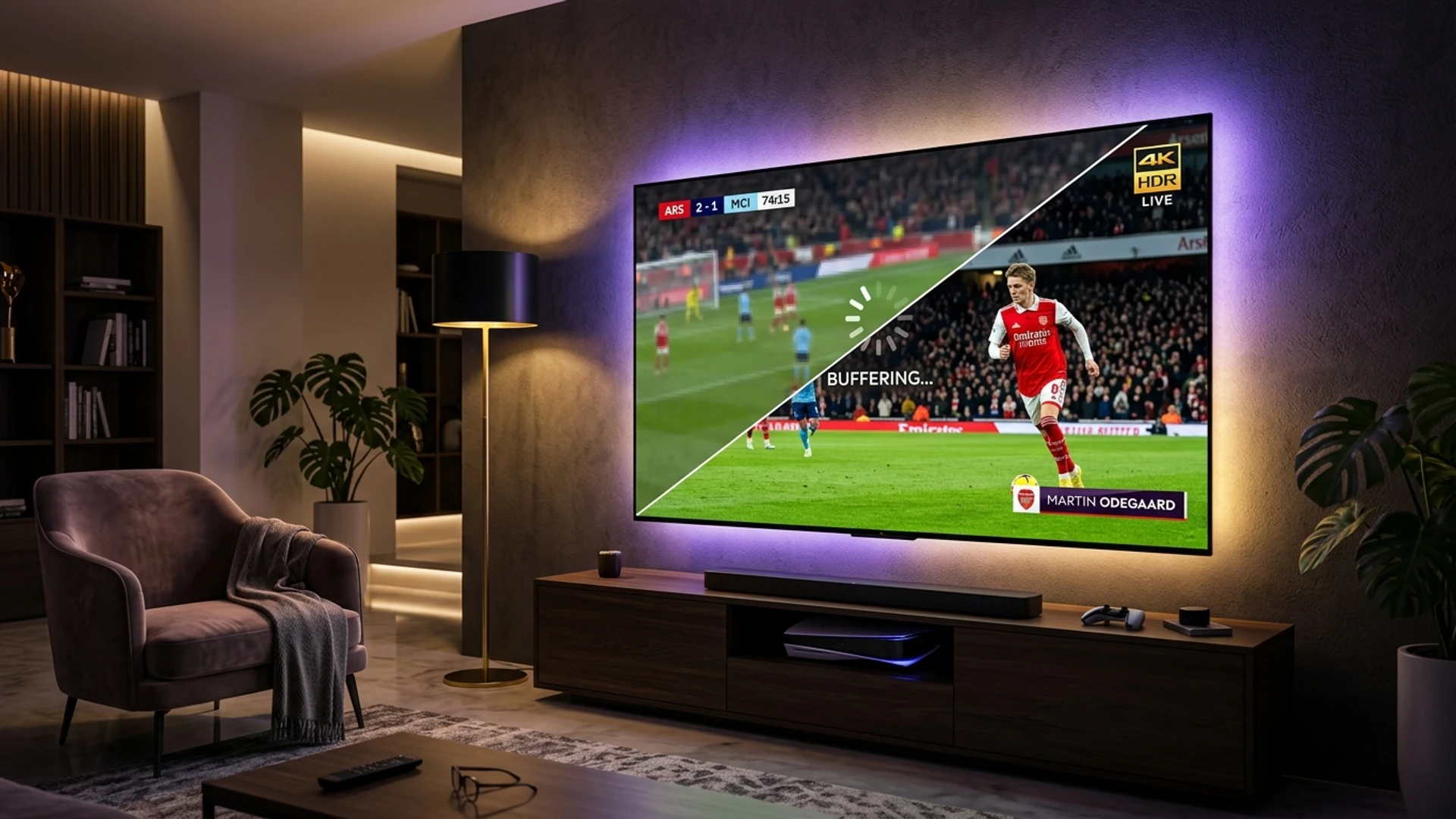
- Anti-Freeze 10.0 Redundancy: Enterprise-grade global CDN edge nodes that guarantee 99.99% uptime and prevent buffering stalls during high-traffic global broadcasts.
- 120,000+ Ultra HD Movies & Series: A colossal on-demand library featuring high-definition cinema releases, multi-language subtitles, and automatic weekly additions of trending titles.
- Universal Multi-Device Freedom: Connect using TiviMate, IPTV Smarters, IBO Player, or IPTVX across Samsung/LG Smart TVs, Amazon Firesticks, Apple TV 4K, and Android boxes.
- Transparent Pricing with Zero Hidden Fees: No contracts, no hardware rental charges, and no surprise price hikes, backed by our 7-day money-back guarantee.
To explore our flexible subscription packages and take control of your television entertainment, visit the Wizard TV Pricing page.
Experience All-In-One Entertainment Today
Stream on Smart TVs, Firestick, Apple TV, and Android with instant automated activation. Backed by 24/7 technical customer support and a 7-day money-back guarantee.
Get Wizard TV SubscriptionFrequently Asked Questions
Conclusion
The golden age of inexpensive, simple streaming apps has evolved into an era of subscription fatigue, inflated monthly costs, and fragmented viewing experiences.
While mainstream streaming platforms like Netflix and Disney+ remain valuable for exclusive original dramas and offline mobile downloads, they fail to provide the unified, effortless live television, news, and comprehensive sports coverage that households desire daily.
Internet Protocol Television solves this fragmentation. By consolidating 50,000+ live global channels, complete live sports packages without blackouts, and over 120,000 on-demand titles into a single, beautifully organized channel guide, IPTV delivers the ultimate television experience at an honest price.
Ready to simplify your home entertainment and save over $1,500 every year? Explore Wizard TV Pricing Plans today and discover the freedom of all-in-one television streaming.