How to Choose the Best IPTV Service in 2026: The Complete Buyer’s Blueprint
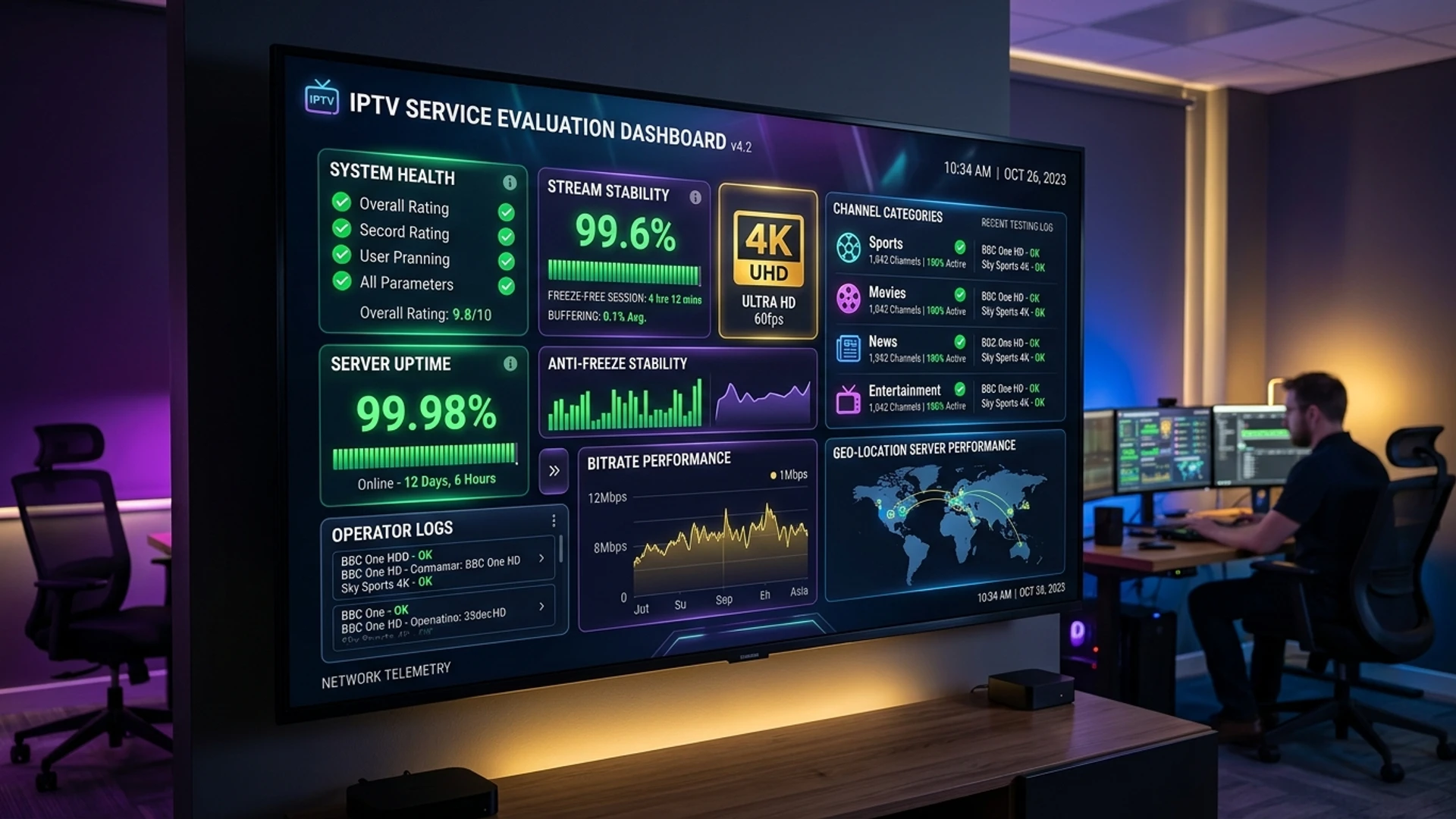
Selecting an IPTV provider in 2026 can feel like navigating a digital minefield. As traditional cable television costs continue to climb—with the average household cable bill now exceeding $150 per month—hundreds of thousands of consumers are turning to Internet Protocol Television to reclaim control over their home entertainment budgets.
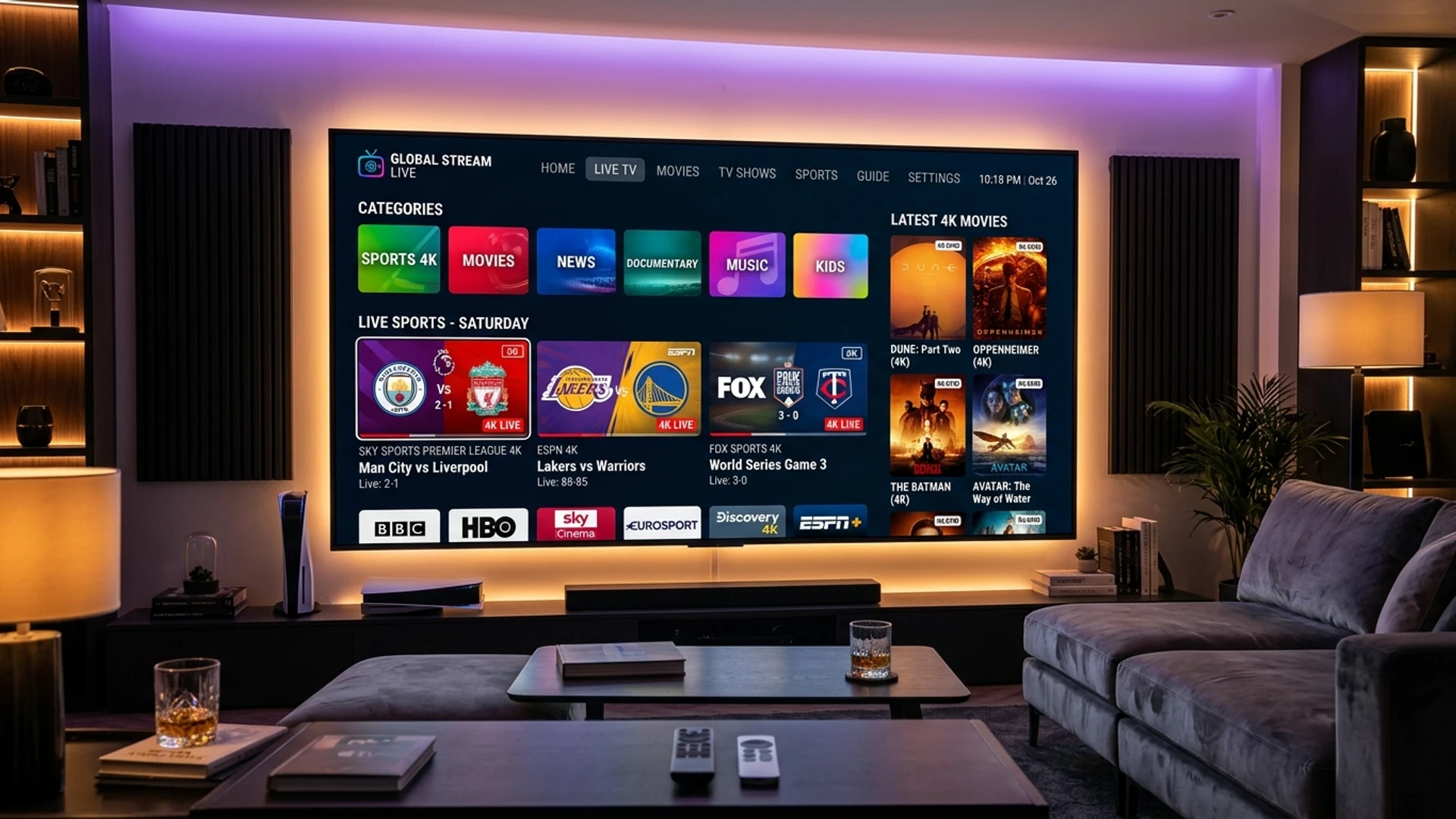
The appeal is undeniable: for a fraction of the cost of legacy broadcast packages, an IPTV service can unlock tens of thousands of live global television channels, comprehensive international sports packages, local network broadcasts, and expansive on-demand movie and series libraries.
However, the explosive growth of the IPTV market has led to an influx of low-quality, fly-by-night operators. A simple online search reveals hundreds of providers, each presenting nearly identical marketing claims: "100% Buffer-Free," "99.9% Uptime," "Over 80,000 Channels," and "Instant Activation."
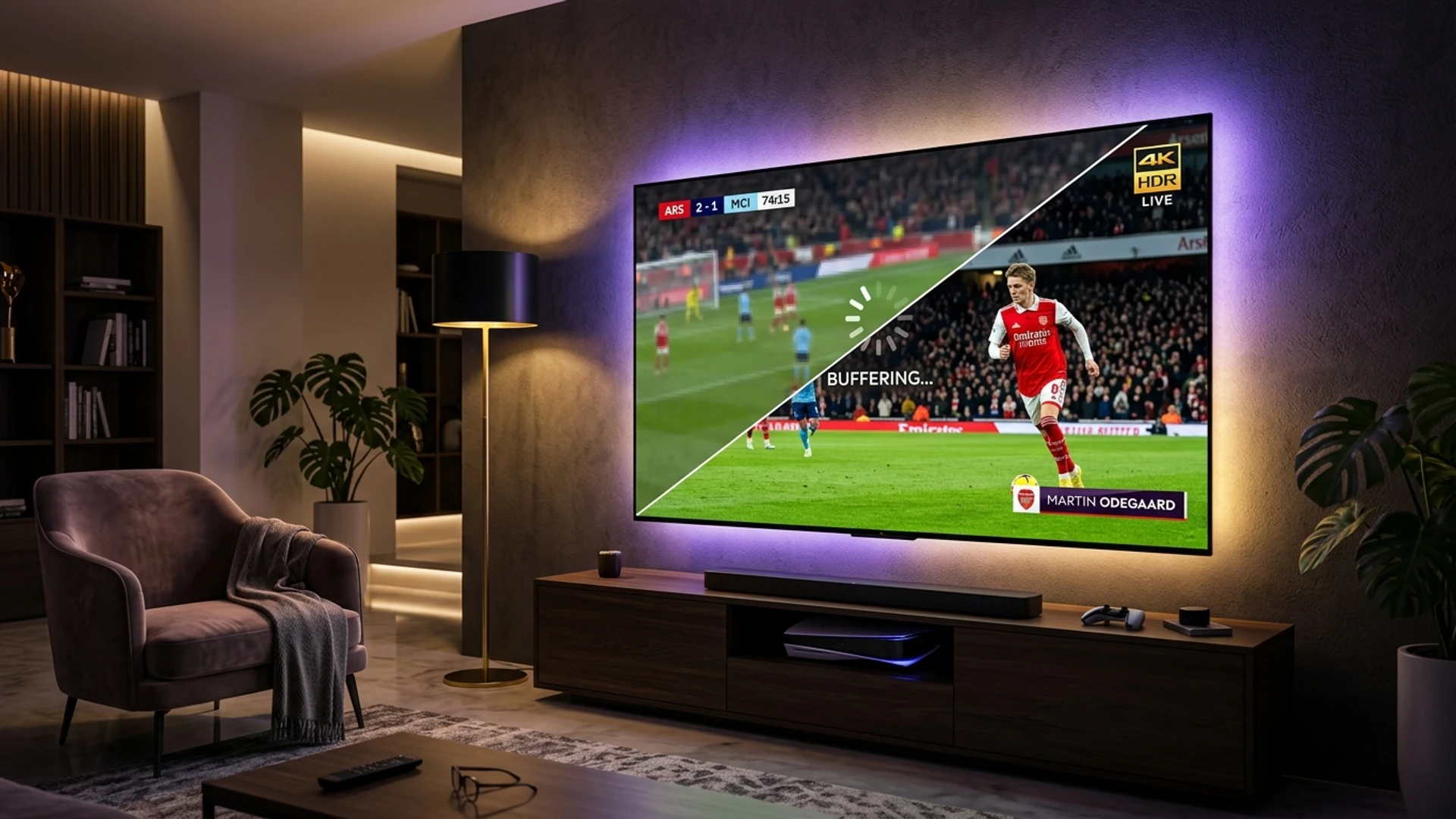
Behind these marketing promises, the reality is starkly divided. On one end of the spectrum are fly-by-night resellers running overloaded, unmanaged servers that freeze every time a weekend football match kicks off. On the other end are professional, infrastructure-first streaming services operating enterprise-grade Content Delivery Networks (CDNs) with dedicated transponders, true 60 FPS video feeds, and 24/7 customer support.
Choosing the wrong service leads to wasted money, constant buffering, blank Electronic Program Guides (EPG), missing channels, and complete silence when you reach out for technical help.
This comprehensive guide serves as an authoritative, objective buyer's blueprint for 2026. You will learn the technical criteria necessary to evaluate an IPTV service, how to audit server reliability before paying, how to spot predatory scams and reseller traps, how to test trial streams rigorously, and how to select a streaming partner that delivers reliable, cinema-grade entertainment for your entire household.
The IPTV Ecosystem: How Providers Actually Deliver Streams
To evaluate an IPTV provider objectively, you must look past website copy and understand the underlying technical pipeline that delivers live television into your living room.
An IPTV service does not magically transmit video across the internet. It relies on a complex, multi-tiered infrastructure chain:
[1. Signal Ingest] ──> [2. Real-Time Encoding] ──> [3. Load-Balanced Core] ──> [4. CDN Edge Relays] ──> [5. User Media Player]
  Satellite Dish Farm    H.264 / HEVC Hardware       Dynamic Traffic Balancing   Geographic Cache Nodes    TiviMate / Smart TV
- Broadcast Acquisition (Signal Ingest): High-caliber providers maintain satellite dish farms, fiber studio interconnects, and terrestrial antenna arrays across major geographic regions (North America, UK, Europe, Middle East, Asia). This allows the service to capture raw, uncompressed digital television signals directly from orbital broadcast satellites.
- Hardware Encoding & Transcoding: Raw broadcast signals transmit at massive bitrates (often 20 to 50 Mbps per channel) that cannot be streamed over standard residential internet connections. High-powered server farms compress these feeds in real time using modern codecs—such as H.264/AVC, H.265/HEVC, and AV1—balancing visual sharpness against bandwidth efficiency.
- Core Traffic Balancing & Anti-Freeze Architecture: Centralized middleware monitors server health and incoming viewer volume. When viewer numbers spike during high-profile events (e.g., the Super Bowl or a Champions League final), dynamic load-balancers distribute incoming stream requests across synchronized server clusters, preventing any single machine from crashing.
- Content Delivery Network (CDN) Edge Caching: Video stream segments are continuously pushed to edge caching servers located in major internet hubs worldwide (New York, London, Frankfurt, Singapore). When you tune to a channel, your media player connects to the geographically closest edge server, minimizing packet latency and transit hops.
- Client-Side Playback Application: Your television, streaming stick, or mobile device runs a specialized media player (such as TiviMate, IPTV Smarters Pro, or IBO Player) that decodes incoming video packets and renders them onto your screen while populating current schedule information via an XMLTV EPG feed.
Understanding this technical pipeline reveals the fundamental truth of the IPTV market: reliable streaming requires substantial ongoing capital investment in server hardware, bandwidth transit, and network engineering. Budget providers offering absurdly low prices ($2 to $3/month) simply cannot afford this infrastructure, which is why their streams inevitably collapse under peak demand.
8 Essential Pillars of a Top-Tier IPTV Service
When auditing potential IPTV providers, measure each service against these eight fundamental technical pillars.
Pillar 1: Verified Server Reliability and Anti-Freeze Redundancy
The absolute baseline requirement for any television service is uninterrupted uptime. A service that buffers for 30 seconds every five minutes is completely unusable, regardless of how many channels it offers.
Key Infrastructure Indicators to Check:
- Distributed CDN Architecture: Does the provider operate multi-location edge nodes, or do all stream requests route back to a single vulnerable server in one data center?
- Anti-Freeze Protocol: Premium providers deploy proprietary anti-freeze routing (such as Wizard TV's Anti-Freeze 10.0). These backend protocols actively monitor packet acknowledgments; if a transit link experiences latency spikes, the stream automatically failovers to an alternate data path before the client-side buffer runs dry.
- Dedicated Outbound Bandwidth: A provider serving tens of thousands of active viewers during prime-time hours must maintain multi-gigabit outbound transit pipelines with Tier-1 carriers (such as Lumen, Telia, or Cloudflare) to prevent bandwidth bottlenecks.
Pillar 2: Native Frame Rates and True Resolution Tiers
Do not accept vague marketing labels like "Ultra HD" or "Super 4K." Demand technical precision regarding resolution and frames per second (FPS).
- The 60 FPS Standard for Live Sports: Fast-moving camera pans across sports fields look juddery and unwatchable at standard 30 FPS. Top-tier providers deliver all major sports networks in native 1080p at 60 FPS (or 50 FPS for European broadcasts), delivering silky-smooth athletic motion.
- Genuine 4K Ultra HD (2160p): Premium services provide dedicated 4K channels for high-profile sporting events, documentary networks, and blockbuster cinematic releases, streaming at bitrates between 18 and 30 Mbps.
- Standard & High Definition Tiers: For users with slower internet connections or mobile data caps, the provider should also provide well-compressed 720p HD and 1080p FHD streams encoded in efficient H.265 (HEVC) compression.
Pillar 3: Catalog Curation vs. Unmonitored Channel Dumps
One of the most widespread tactics used by low-tier providers is advertising exaggerated channel counts ("75,000+ Live Channels!").
The Reality Behind Inflated Channel Numbers:
When a provider claims 80,000 channels, their playlist is almost certainly an unmanaged web scrape. These massive playlists contain:
- Hundreds of broken, offline links that display "Stream Error."
- Low-quality 360p webcam feeds and public access loops.
- Dozens of duplicate entries for the same network under different country headers.
- Bloated M3U files (often 30+ MB) that crash streaming sticks and cause media players to freeze during playlist synchronization.
What to Look For Instead:
Look for a curated, actively monitored channel lineup (typically 30,000 to 50,000 active channels). A premium provider meticulously audits its lineup, organizes channels into intuitive regional and genre categories, provides redundant backup feeds for major networks (e.g., ESPN Backup 1, Sky Sports Feed B), and quickly removes dead links.
Pillar 4: Electronic Program Guide (EPG) Accuracy and Speed
An IPTV service without an accurate, fast-loading Electronic Program Guide is like a library with no catalog. The EPG allows you to browse what is currently playing, read episode descriptions, see upcoming start times, and schedule recordings.
EPG Quality Benchmarks:
- Automated Synchronization: The guide should populate seamlessly upon entering your Xtream Codes API credentials without requiring complex manual URL configurations.
- Full 7-Day Timelines: The guide should provide comprehensive program schedules extending 5 to 7 days into the future, rather than only displaying the current and next program.
- Time Zone Alignment: The EPG server must automatically map program start times to your local device time zone to prevent schedule desynchronization.
- Dedicated EPG Servers: Top providers host their XMLTV data on separate, high-speed caching servers so that downloading guide data never slows down your active video streams.
Pillar 5: Device and Media Player Agnosticism
Beware of providers that force you to download an obscure, proprietary application from an unknown third-party website.
Why Open Player Compatibility Is Critical:
- Freedom of Choice: The best IPTV services provide standard Xtream Codes API credentials (server URL, username, password) and M3U Plus playlist links. This gives you the freedom to choose industry-standard, polished media player applications such as TiviMate, IPTV Smarters Pro, IBO Player, XCIPTV, OTT Navigator, or IPTVX.
- Security & Privacy: Proprietary, unverified APK files often contain aggressive advertising adware, battery-draining background trackers, or security vulnerabilities. A reputable provider lets you use verified apps from official app stores (Google Play Store, Amazon Appstore, Apple App Store).
- Cross-Platform Accessibility: Your subscription should work effortlessly across your entire device ecosystem—including Samsung Smart TVs (Tizen), LG Smart TVs (webOS), Amazon Fire TV Sticks, Apple TV 4K, Android TV boxes (NVIDIA Shield), Windows PCs, and mobile devices.
Pillar 6: VOD Library Depth, Organization, and Refresh Frequency
In addition to live linear television, a high-value IPTV subscription functions as a comprehensive on-demand streaming hub.
VOD Standards to Demand:
- Expansive Film & Series Catalog: An extensive catalog containing 100,000+ titles spanning classic cinema, international releases, and current Hollywood blockbusters.
- Prompt Additions: Trending television episodes and newly released theatrical films should be added to the library within 24 to 48 hours of public digital release.
- Rich Metadata: Titles should display high-resolution movie posters, plot summaries, release years, cast listings, and IMDb ratings.
- Multiple Audio & Subtitle Tracks: Movies should feature selectable multi-language audio and synchronized subtitle tracks (SRT format).
Pillar 7: Multi-Connection and Multi-Room Flexibility
Consider the viewing habits of your entire household. A single-connection IPTV subscription allows streaming on only one television or device at any given moment.
If you have a multi-television home:
- Look for providers that offer transparent multi-room subscription plans (supporting 2, 3, or 4 concurrent connections).
- Multi-connection plans allow one family member to watch live football in the living room while another watches an on-demand movie in the bedroom and a third streams news on a tablet—all under a single account.
- Avoid providers that charge full price for each additional device; reputable services offer discounted multi-connection bundles.
Pillar 8: Responsive, Human Technical Support
When an upstream satellite transponder changes frequencies or your streaming device experiences an authentication glitch, having access to prompt, competent customer assistance is vital.
Evaluating Support Quality:
- Communication Channels: Look for direct, real-time communication channels such as WhatsApp assistance, Live Web Chat, or dedicated Telegram desks, rather than an unattended generic email contact form.
- Response Times: Pre-sale and technical inquiries should receive human responses within 15 to 30 minutes during normal operating hours.
- Comprehensive Documentation: A professional provider maintains clear, step-by-step setup tutorials with screenshots for every major device platform (Firestick, Smart TV, Apple TV, Android).
Experience Verified IPTV Excellence
Discover why Wizard TV is rated the top IPTV service in 2026. Enjoy 50,000+ premium channels, 120,000+ VOD titles, and 99.99% server uptime with zero contracts.
Browse Wizard TV PlansIPTV Provider Evaluation Matrix
Use this quick-reference matrix to compare budget reseller operations against an enterprise-grade IPTV service:
| Evaluation Criteria | Red Flag / Budget Provider | Gold Standard / Enterprise Provider |
|---|---|---|
| Server Infrastructure | Single unmanaged VPS; frequent buffering | Global CDN edge network with load balancing |
| Sports Frame Rate | Choppy 30 FPS / inconsistent feeds | True 60 FPS (1080p) & native 4K UHD feeds |
| Channel Catalog | 80,000+ unorganized, dead links | 50,000+ curated, active global channels |
| Anti-Freeze Tech | None; video freezes when servers saturate | Anti-Freeze 10.0 protocol with automated failover |
| EPG Integration | Missing, blank, or desynchronized | 7-day automated XMLTV guide with local time sync |
| App Support | Forced proprietary APK with ads | Full Xtream Codes API / M3U support for TiviMate, etc. |
| Trial Availability | None; refuses testing before full payment | 24-hour free trial or low-cost test pass |
| Subscription Terms | "Lifetime" one-off payments ($50) | Transparent 1, 3, 6, or 12-month subscriptions |
| Customer Support | No response / generic bot answers | Real-time human support via WhatsApp & Live Chat |
| Refund Policy | "Strictly no refunds under any circumstances" | Clear 7-day money-back satisfaction guarantee |
5 Critical Warning Signs: How to Spot IPTV Scams
Before entering payment details on any IPTV website, watch for these five common warning signs that indicate an unreliable or fraudulent operator.
[IPTV Buyer Scam Detection Checklist]
  ├── [CRITICAL WARNING] "Lifetime Subscription" for $50–$90 ──> 100% Exit Scam Risk!
  ├── [WARNING] Anonymous Telegram-Only Sellers with No Website ─> Zero Accountability!
  ├── [WARNING] Exaggerated "150,000+ Channels" Claims ───────────> Automated Scrape / Dead Links!
  ├── [WARNING] Refusal to Provide a Peak-Hour Trial Pass ───────> Hiding Server Overload!
  └── [WARNING] Forcing Unverified Sideloaded APK Files ──────────> Potential Malware / Adware!
1. The "Lifetime Subscription" Scam
This is the most pervasive fraud in the IPTV sector. A website advertises "Lifetime Access to 60,000 Channels for a One-Time Payment of $60."
Why It Is Always a Scam: Streaming live video over the internet incurs continuous recurring operational expenses: data center rack leases, multi-gigabit transit bandwidth, transponder maintenance, EPG licensing, and engineering salaries. No business can provide continuous live streaming bandwidth indefinitely for a single $60 payment.
Operators offering "lifetime" accounts run a deliberate exit-scam cycle: they collect one-off payments for several months until server expenses exceed incoming cash flow, abruptly shut down their website and servers, and relaunch under a new brand name the following week. Always choose monthly, quarterly, or annual plans with reputable operators.
2. Refusal to Provide a Free or Low-Cost Trial
A provider that operates robust, high-performance servers has complete confidence in its product. They will happily provide a 24-hour test account or a low-cost $2 trial pass so prospective buyers can inspect stream stability firsthand.
If an IPTV website adamantly refuses to provide a trial and demands that you purchase a full 12-month subscription upfront, they are almost certainly hiding severe server congestion, poor channel quality, or non-functional streams.
3. Anonymous Sellers Operating Exclusively on Social Media
Be cautious of individuals selling IPTV subscriptions exclusively through direct messages on Telegram, Facebook Marketplace, or Reddit with no official domain, no customer dashboard, and no verifiable track record.
These sellers are typically low-level resellers operating with minimal credit balances on third-party panels. If their upstream wholesaler bans them or shuts down, your subscription vanishes instantly with zero recourse. Purchase exclusively from established brands with dedicated web infrastructure, secure customer portals, and professional checkout gateways.
4. Untested Weekend Match-Day Claims
Never evaluate an IPTV trial on a quiet Tuesday morning at 10:00 AM and assume performance will be identical on Sunday afternoon.
Underpowered providers can deliver acceptable streams when viewer volume is low. The true test of an IPTV service occurs during peak global events—such as Premier League kickoffs, NFL Sunday afternoons, or UFC pay-per-view events. If a provider's streams begin buffering as soon as kickoff arrives, their servers lack the egress capacity to handle peak concurrency.
5. Suspicious Payment Gateways Demanding Invasive Personal Data
Purchasing an entertainment streaming subscription should never require submitting personal identification documents, utility bills, or unencrypted payment details.
Legitimate providers utilize secure SSL-encrypted checkout gateways that accept standard credit cards (Visa, MasterCard), PayPal, or established cryptocurrencies (Bitcoin, USDT). Be wary of sites that redirect you to shady third-party money transfer links or personal peer-to-peer wire transfers.
The 4-Step IPTV Buyer’s Decision Process
Follow this structured, practical four-step process to select and onboard your ideal IPTV subscription:
[Step 1: Audit Household Needs] ──> [Step 2: Request 24h Trial] ──> [Step 3: Peak-Hour Stress Test] ──> [Step 4: Onboard Plan]
Identify channels, sports, devices    Obtain Xtream Codes / M3U        Test 60 FPS sports, EPG, VOD       Select 3-12 mo package
Step 1: Define Your Viewing Priorities
Before searching for providers, identify exactly what your household requires:
- Essential Channels: Which specific networks are non-negotiable? (e.g., local US networks, UK sports, Canadian news, European entertainment).
- Sports Requirements: Do you need native 60 FPS sports feeds for Premier League, Champions League, NFL, NBA, or Formula 1?
- Active Screens: How many televisions or devices will stream simultaneously?
- Primary Hardware: What devices will you use? (Firestick 4K, Apple TV, Smart TV, Android box).
Step 2: Request a 24-Hour Trial Account
Contact your shortlisted provider and request a 24-hour trial pass. Ensure that you schedule the trial to coincide with an active sporting event or during evening prime-time hours (between 7:30 PM and 10:30 PM).
Step 3: Execute the 15-Minute Technical Audit
Once your trial credentials arrive, install an industry-standard player (such as TiviMate on Android/Firestick or IPTVX on Apple TV) and execute these technical checks:
- Zapping Latency: Switch between 10 different channels consecutively. A healthy stream should resolve and play smoothly within 1.5 to 2.5 seconds.
- Sports Fluidity: Tune to a live football or basketball game. Verify that the ball and player movements are fluid and free from judder (confirming a true 50/60 FPS stream).
- EPG Accuracy: Scroll through your favorite channels and verify that current show titles, descriptions, and episode guides are fully populated and time-accurate.
- VOD Performance: Launch a high-definition movie from the VOD section. Fast-forward 15 minutes, rewind 5 minutes, and verify that playback resumes without freezing.
- Multi-Hour Stability: Keep a live channel running continuously for at least 45 minutes to confirm there are no memory leaks or progressive buffering stalls.
Step 4: Choose a Scaled Subscription Term
If the trial passes all benchmarks, begin with a 3-month, 6-month, or 12-month subscription.
While annual plans offer the steepest discounts, reputable providers like Wizard TV offer balanced pricing across all durations, allowing you to choose the commitment level that suits your budget.
Technical Deep-Dive: Video Codecs (H.264 vs. HEVC vs. AV1)
When evaluating an IPTV service's technical maturity in 2026, inquire about the video compression codecs utilized across their broadcast transponders. The choice of compression codec dictates picture sharpness, color gradation, and bandwidth requirements.
Codec Compression Efficiency Benchmark:
H.264 / AVC  ──> Baseline compatibility; requires 8–10 Mbps for clean 1080p.
HEVC / H.265 ──> 50% more efficient; delivers superior 4K HDR at 15–20 Mbps.
AV1          ──> Next-generation open standard; pristine quality with ultra-low bandwidth.
1. H.264 (Advanced Video Coding - AVC)
H.264 remains the legacy workhorse of digital video streaming.
- Pros: 100% hardware compatibility across virtually every television, computer, and mobile device manufactured over the past fifteen years.
- Cons: Inefficient compression by modern standards. To deliver a clean, artifact-free 1080p 60fps stream, an H.264 feed requires between 8 to 12 Mbps of bandwidth. Attempting to compress 4K video using H.264 results in massive bandwidth demands (35+ Mbps) or severe blocky compression artifacts.
2. H.265 / HEVC (High Efficiency Video Coding)
HEVC is the current gold standard for premium IPTV broadcasting.
- Pros: Delivers approximately 50% greater data compression efficiency compared to H.264 at identical visual quality levels. HEVC supports 10-bit color depth (High Dynamic Range - HDR10 and Dolby Vision), providing richer contrast, deeper blacks, and vibrant stadium turf colors.
- Bandwidth Benefit: A pristine 1080p 60fps sports stream encoded in HEVC requires only 5 to 7 Mbps, while a full 4K Ultra HD feed streams smoothly at 15 to 22 Mbps.
- Device Support: Supported natively by all modern Smart TVs, Amazon Firesticks (4K models), Apple TV 4K, and certified Android TV streaming boxes.
3. AV1 (AOMedia Video 1)
AV1 is the emerging next-generation open-source codec developed by a consortium of major technology leaders (including Google, Apple, Microsoft, and Netflix).
- Pros: Up to 30% more efficient than HEVC, providing breathtaking visual fidelity at ultra-low bitrates.
- Current Status: Modern streaming hardware—such as the Fire TV Stick 4K Max (2nd Gen), Chromecast with Google TV, and modern Smart TV chipsets—now feature dedicated AV1 hardware decoders. Progressive IPTV providers like Wizard TV are actively integrating AV1 encoding pipelines across select channels to deliver pristine streams to bandwidth-constrained households.
Legal, Privacy, and ISP Peering Considerations
Choosing an IPTV provider also requires an understanding of how internet privacy and telecommunications routing intersect with your streaming experience.
1. Understanding ISP Data Retention and Bandwidth Throttling
Internet Service Providers continuously monitor data traffic flowing through their residential backbones. High-volume, continuous UDP/TCP video streams from external content delivery networks are routinely flagged by automated ISP network management systems.
During periods of high regional network traffic (such as Sunday afternoon football or Friday evening prime time), certain ISPs enforce traffic shaping policies. If your ISP detects high-bandwidth video packets, it may intentionally throttle throughput to your IP address, causing your IPTV stream to degrade or buffer.
2. The Role of Encrypted WireGuard VPNs
To protect your privacy and ensure your ISP cannot inspect or throttle your viewing activity, many IPTV subscribers utilize a Virtual Private Network (VPN).
- Traffic Encryption: A VPN encapsulates all streaming packets inside an encrypted tunnel (AES-256 or ChaCha20 encryption). Your ISP can only see that data is moving between your router and a secure VPN server node; they cannot see that you are streaming television, what channels you are watching, or which server you are connecting to.
- Protocol Matters: Always select a VPN provider that supports WireGuard. Legacy protocols like OpenVPN introduce heavy cryptographic overhead that can reduce your streaming speeds by 20% to 40%. WireGuard operates at the Linux kernel level, delivering near-line-speed performance with virtually zero latency impact.
3. Service Redundancy and Disaster Recovery
A reputable IPTV service maintains redundant broadcast acquisition sites. In the broadcasting industry, satellite signals can be interrupted by localized atmospheric disturbances known as "rain fade" or orbital sun outages.
- Dual-Transponder Ingest: Premium services maintain backup capture facilities in different geographic regions. If heavy rain disrupts a satellite dish farm in the UK, automated routing instantly switches the broadcast feed to a mirror ingest site in mainland Europe or North America, ensuring that viewers experience zero blackout time.
Why Wizard TV Is the Benchmark for IPTV Excellence
At Wizard TV, we built our streaming ecosystem specifically to eliminate the frustrations common among budget providers:
- 50,000+ Curated Global Channels: Comprehensive live television spanning 150+ countries, organized with zero duplicate clutter.
- Native 60 FPS 4K Live Sports: Broadcast feeds for every major football league, NFL, NBA, Formula 1, and combat sports PPVs in fluid 60 frames per second.
- Anti-Freeze 10.0 Architecture: Distributed CDN edge clusters with dynamic server load-balancing, guaranteeing 99.99% uptime during the world's biggest sports events.
- 120,000+ Ultra HD Movies & Series: A vast on-demand library featuring 4K HDR releases, multi-language subtitles, and daily catalog additions.
- Universal Player Freedom: Full Xtream Codes API and M3U Plus support for TiviMate, IPTV Smarters, IBO Player, Apple TV, Firestick, and Smart TVs.
- 24/7 Human Customer Assistance: Responsive technical support via WhatsApp and Live Chat, backed by our 7-day money-back guarantee.
To explore our flexible subscription packages and experience verified streaming excellence, visit the Wizard TV Pricing page.
Ready for Buffer-Free 4K Streaming?
Instant automated setup on Smart TVs, Firesticks, Android, and Apple TV. Backed by 24/7 technical customer support and a 7-day money-back guarantee.
Join Wizard TV TodayFrequently Asked Questions
Conclusion
Finding the best IPTV service in 2026 comes down to evaluating real-world server performance rather than empty marketing promises. By prioritizing distributed CDN edge infrastructure, verified 60 FPS sports streams, accurate EPG integration, open player compatibility, and responsive human support, you can secure an exceptional streaming service that replaces expensive cable permanently.
Never fall for unrealistic "lifetime" deals, always test stream stability during live matches, and partner with an established, infrastructure-focused provider.
Ready to experience premium live television with guaranteed stability and crystal-clear 4K picture quality? Visit the Wizard TV Pricing page today and discover why thousands of viewers trust Wizard TV for their home entertainment.